
https://www.linkedin.com/pulse/new-high-strategic-management-transformations-times-ai-nh%C3%BCr
Indeed, the field of organizational psychology has been expanding, and several concepts have gained prominence in recent years. These concepts focus on understanding and improving various aspects of organizations, including employee well-being, leadership, teamwork, and organizational effectiveness. Here are a few concepts that are currently in vogue and their relevance:
· Transformational Leadership
· Psychological Safety
· Positive Psychology
· Employee Engagement
· Organizational Culture
· Diversity and Inclusion
These are just a few examples of the concepts that have gained traction in organizational psychology. By incorporating these concepts into their practices, organizations can create healthier and more productive work environments, ultimately leading to better outcomes for both employees and the organization as a whole.
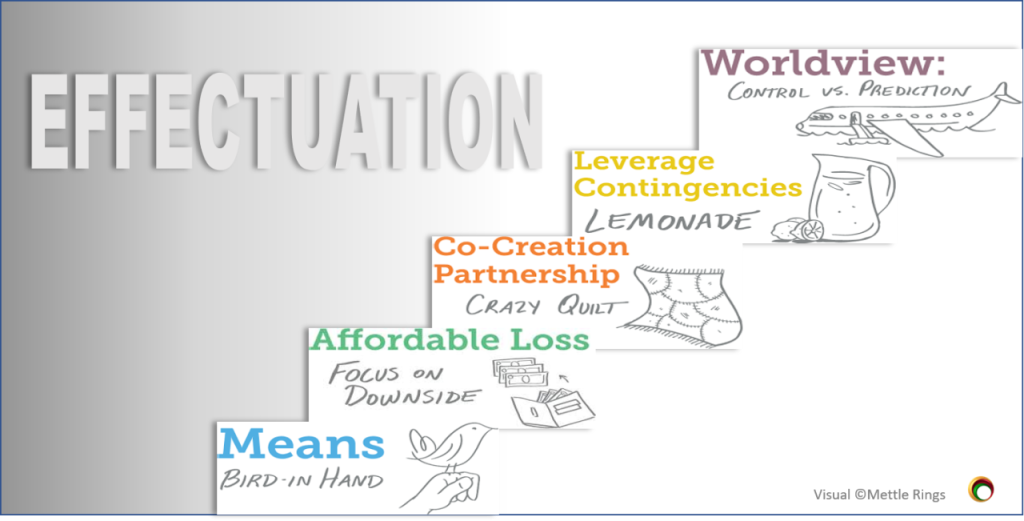
One such concept in this context is becoming increasingly popular, it is called Effectuation. A decision-making framework developed by Professor Saras Sarasvathy at the University of Virginia Darden School of Business in 2008. It offers a different perspective on entrepreneurship and strategic thinking compared to traditional approaches. Effectuation focuses on the actions and processes used by expert entrepreneurs when they face uncertainty. It is a theory that explores the cognitive processes and behaviors of successful entrepreneurs and focuses on how they make decisions under conditions of indecision and ambiguity.
The concept of effectuation emerged from research on successful entrepreneurs and their decision-making behaviors. It was observed that entrepreneurs often started their ventures without a detailed business plan or a clear path to success. Instead, they relied on their ability to navigate uncertainty and take advantage of available resources and opportunities. Effectuation captures the logic and reasoning behind these entrepreneurial actions.
At the core of effectuation are five principles:
Bird-in-Hand Principle: Entrepreneurs start with their available means, such as their skills, knowledge, and network. They focus on leveraging these existing resources to create opportunities.
Affordable Loss Principle: Entrepreneurs set a limit on the potential loss they are willing to accept in a venture. Rather than focusing solely on potential gains, they assess the risk and make decisions based on what they can afford to lose.
Crazy-Quilt Principle: Entrepreneurs form partnerships and alliances with others who can contribute to their venture. They leverage the resources, expertise, and connections of these partners to build their business.
Lemonade Principle: Entrepreneurs view surprises and unexpected events as potential opportunities. They adapt and adjust their plans based on emerging situations and constraints, turning challenges into advantages.
Pilot-in-the-Plane Principle: Entrepreneurs believe they have the ability to influence and shape their future. They see themselves as active agents rather than passive observers, and they continuously adapt their plans based on the evolving environment.
Effectuation provides entrepreneurs with a mindset and a set of principles to guide their decision-making process. It emphasizes a flexible and iterative approach to entrepreneurship, where action and learning go hand in hand. As compared to the traditional approaches to entrepreneurship and decision-making that often relied on predicting the future and planning to achieve specific goals.
Collectively these principles carve an approach that presents a sharp contrast to the appreciation of traditional approach to theoretical business management. It’s exceptionally flexible in terms of creativity, responsiveness, collaboration, opportunity and means-driven. And it makes complete sense!
The strength of this theoretical model makes it the most accessible business technique for anyone. It is revolutionary in itself, that it is universally applicable evenly across any problem-solving situation.
I have been making use of this application successfully to coach enthusiasts to gain access over their problem-solving resolves. Its affinity to the cognitive bent of executive action makes it more human relevant than restricting its use to business arena.
Effectuation has gained recognition and has been applied in various domains beyond entrepreneurship, including innovation management, corporate strategy, and even personal decision-making. It offers a valuable perspective for individuals and organizations navigating uncertain and complex environments.
The field of organizational psychology is gaining momentum and there’s a lot to benefit from a little investment in this direction that promises greater benchmarks to business projections in profit-trajectory. With the advent of AI, it is becoming increasingly important to divert considerations towards employee well-being to ensure a swift futuristic transformational shift for human-resource.